
Solidarity Scholarships: the Story of Salma and Amina
Today I write from a place of anger, helplessness and frustration—because I am angry and outraged.
The story of Salma and Amina is the story of many girls around the world, I am sure of that—and yes, I say girls. Today, though, I will speak about what I know and what I live every day: Lamu. This Lamu where I so often hear how lucky I am, that I live in paradise. Paradise… my ovaries!
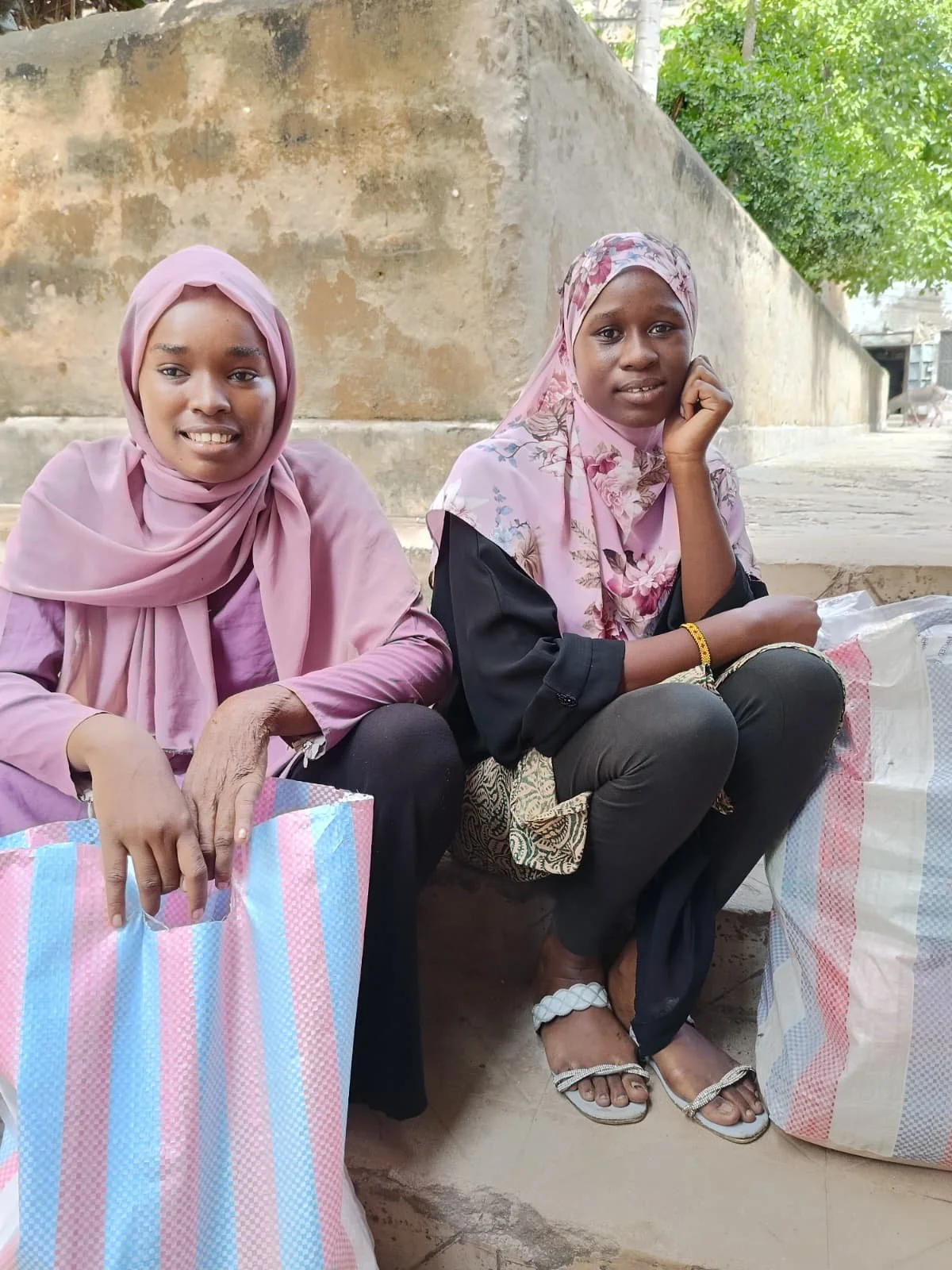
Salma and Amina are the eldest sisters in their families. Salma has two younger brothers, and Amina has five. Both of them, at the age of 9 or 10, stopped going to school. First, because there was no money to pay for it—yes, in Kenya education is compulsory, but it is not free. And second, because their mothers married their second or third husbands, who wanted to have more children but did not accept the children from previous marriages. And so, voilà—the girls became responsible for the younger ones, sometimes even in a different household. This is the case with Amina.
I have known Amina since I arrived in Lamu in 2018, always carrying a baby— a baby who changed over the years. Her family is extremely poor, deeply fragmented, and clearly socially excluded. I have argued with her mother so many times that I’ve lost count, always trying not to judge her, though I admit that sometimes I have. Over the years, the two of us have come to know each other better and have tried to fit together the difficult puzzle formed by our different cultures. And three years ago, after many stories that are not relevant here, we finally managed to get Amina back into school.
Access to education: the foundation of everything
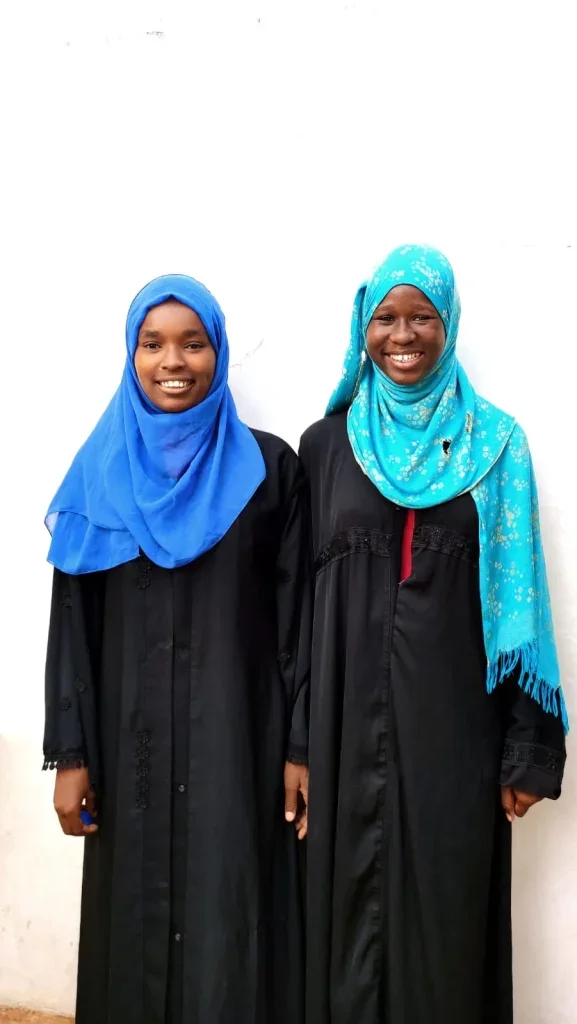
The change Amina went through was extraordinary. She was far behind and older than her classmates, but little by little she reached the minimum requirements to move up each year. The shy girl became a smiling, fun, confident child with lots of friends her own age. She left behind her past as a “mother” and was finally able to be a child again.
Salma’s story is similar, but in her case it was her mother who came to ask me if we could sponsor her. I found a sponsor, and that’s when we ran into another problem: we needed the consent and ID copy of the mother’s husband for Salma to return to school, and he didn’t want to hear anything about speaking to me. I was furious—really furious. I thought about sexism, patriarchy, and all the injustices women suffer simply for being women.
When we reached a point of complete standstill and maximum frustration, a very good Kenyan friend told me he would go and speak to the father and make him understand that it was better for Salma to study—that this was something that could only be discussed between men. He spoke to him the first day; I don’t know what he said. The second day, he came back with the ID and the consent. I remember feeling angry at first—angry that Aron had solved it in 24 hours—but that feeling soon passed. Sometimes you have to lose battles to win the war.
And Salma went back to school. The change was also significant, but beyond that, Salma began to stand out. She didn’t just catch up with her class—she progressed far beyond what her teachers expected. English was the only subject she struggled with, but with support her improvement was remarkable.
Amina and Salma became inseparable, even though they were in different classes and curricula. During every school break we would meet, buy school supplies together, and they would tell me how things were going at school, laughing—a lot—like I had never seen them laugh before. Amina, aware of her situation, always asked to take extra catch-up classes during the holidays.
Both continued to move up year by year, and in December 2022 they finished primary school—but with very different results. Salma was able to stay at the same school, with grades that, compared to our education system, would be around a 7.5—an excellent result, considering she hadn’t attended school from ages 9 to 13. Amina, however, did not reach the minimum score required for secondary schools—200 points in Lamu, which, together with Tana River, has the lowest national exam results.
Finding a school for Amina was incredibly difficult. We tried county public schools, state public schools, private schools—but none would accept her because of her low score. I considered a thousand options: a polytechnic, homeschooling with a private teacher, having her work, teaching her computer skills myself… many possibilities. But none felt right, because I knew that if she didn’t attend a formal school, the risk of her being married off would increase at lightning speed. To give you an idea, schools started on January 23, and by February 23 we still hadn’t secured a place.
But, as often happens, there was a solution. Through contacts and favors, Amina was admitted to a secondary school in Lamu. It’s not the best school—neither in location nor curriculum—but at least it will delay the possibility of marriage for a few years.
Amina may never be a top student, but no one can deny her determination. Salma has realized that she loves studying, and the other day she told me she wants to be a doctor. And of course, we will fight so that—with her effort and ours—her dream can come true.
Be Social Project School Scholarship Programme
For Amina, for Salma, and for many other girls and boys, we are creating a school scholarship programme through sponsorship, because from our point of view, education is the most important tool we have to help change their future. Our aim is to give them the best education possible, strengthen their abilities, and support them where they struggle.
The Be Social Project School Scholarship Programme will prioritise girls, but it will be open to everyone. At the moment, there are already seven children included in this programme, but we want many more to benefit, as there are very close cases we would love to support.
Each case is assessed individually. We know each family’s background and require families to be involved in their children’s education in whatever way they can—sometimes financially, sometimes by ensuring school attendance, or in other ways adapted to each situation. As you know, every case is different.
Current scholarships
Here is a summary of the scholarships currently in place:
Daniel – University
Second-year Nursing student. Approximate cost: €1,200 per year for tuition fees and €550 for living expenses and transport. Funded through a sponsorship from Spain and money raised at a charity birthday.Amina and Salma – Secondary school
Approximate cost: €400 per year. Sponsored by the NGO Amor sin barreras.Eva – Secondary school
Approximate cost: €400 per year. Sponsored from Spain.Raniel, Athmani, Suleiman – Primary school
Approximate cost: €100 per year. Sponsored from Spain.Yahya – Special case
Yahya is 21 years old and only recently had the opportunity to consider his future. He is currently studying at the Lamu Polytechnic, specialising in hospitality (hotel-focused training). Sponsored from Spain.
This programme will be launched very soon. If you are interested in collaborating, please contact us by email and we will send you more information.
Asante sana.