
Materials for the Sensory Stimulation of Children with ASD
Hello everyone!
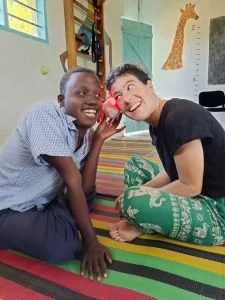
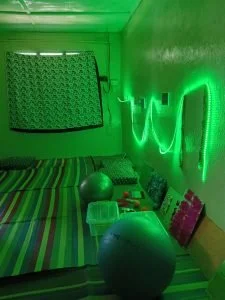
Today we would like to tell you about the different materials we are currently using to stimulate children with ASD in the new multisensory room and gym that we have launched at Mokowe School for the Mentally Disabled through Be Social Project.
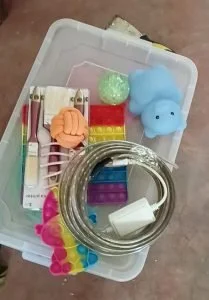
For both the gym and the multisensory room, we have acquired materials specifically designed to support children with Autism Spectrum Disorder (ASD). These resources include coloured LED lights installed around the ceiling, a projector displaying calming images such as the universe, stars and the solar system, as well as a speaker that plays relaxing music. However, the most exciting new addition—and the one that has been most popular with all the children at the school—is a trampoline. It allows us to work with the children when they are happy and highly receptive. On many occasions, we have discovered that very simple items such as scouring pads, toy hammers, bicycle handlebar grips and plastic bottles give us effective ways to interact with the children.
Sensory overstimulation experienced by people with Autism Spectrum Disorder (ASD) often leads them to perceive reality as an environment that can sometimes feel hostile. According to theory, children with ASD may face challenges in behaviour and daily living skills due to difficulties in sensory processing. As a result, some children may be hypersensitive (overreacting) or hyposensitive (showing little response) to environmental stimuli. Each child is unique, and we are still in the process of fully understanding this field. However, what we can say with certainty is that the sensory stimulation we provide at school helps them regulate themselves. This is beneficial both during moments of agitation and during moments of deep withdrawal or abstraction.
Progress of Children with ASD Through Be Social Project’s Multisensory Classroom
We are not experts in ASD, but we can share some real examples we have experienced with our children.
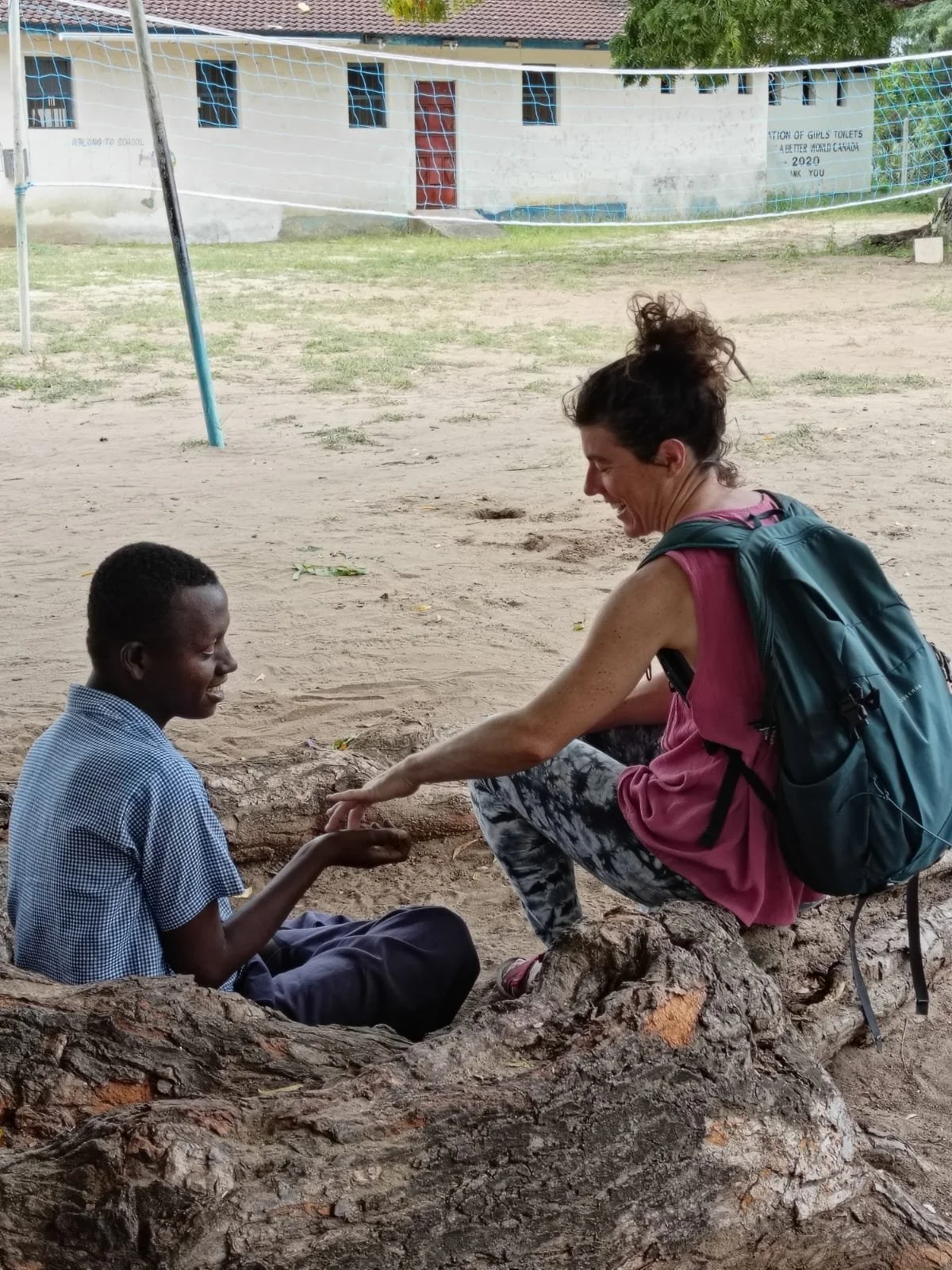
John Canji is a child with ASD who is usually always alone. He rarely interacts with anyone, except on a few occasions with his teacher, Mr. Abdallah. He often sits under a tree—sometimes rocking himself, other times entertaining himself by singing—but always on his own. When you approach him, he usually enjoys the company, but prefers it without physical contact.
This year, Ana brought some head massagers, which turned out to be a huge success. On the very first day, we tried them with John, and it was pure magic. Suddenly, John started to smile, laugh, pay attention to us, and he even learned very quickly how the massager worked, using it both on the ground and on his own body. Mr. Abdallah was happy and deeply moved to see John making eye contact with us and appearing genuinely joyful.
We worked with him over several days, and since then our communication with John has improved noticeably. We can now sit with him and hold his hand; he accepts small gestures of affection. This makes us feel that we are truly on the right path.
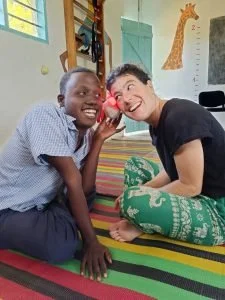
This is just one example, but we have seen progress in almost all the children with ASD at Mokowe School for the Mentally Disabled. None of this would be possible without our members and the donations we receive, which allow the project to continue day after day.
Thank you so much to everyone who makes this possible!
And if you’re not yet a member of Be Social Project—or if you know someone who might be interested—please click on the link to find all the information. You can choose different contribution amounts starting from just €15, and decide whether you’d like to donate monthly, quarterly or annually. Even if it may not seem like much, every contribution is truly needed and helps our projects continue to grow.
If you have any questions, feel free to contact us at hola@besocialproject.com